
Research Use Only
All products supplied by FNA Peptides are strictly for laboratory and scientific research. They are not for human or veterinary consumption, and are not intended to diagnose, treat, cure, or prevent any disease. By entering, you confirm you are 21 years of age or older and accept our Terms and Privacy Policy.
Education
The Research Hub
Educational resources covering research compounds, mechanisms of action, and study methodologies. Content is provided for informational purposes only and does not constitute medical advice.
Featured Research
Longer reads on specific compounds and mechanisms, for researchers who want the full picture.
Recovery
Understanding BPC-157 Signaling Pathways
A synthetic peptide derived from gastric juice compounds, studied for potential regenerative and anti-inflammatory properties. Research suggests it may influence angiogenesis (blood vessel formation), tissue repair, collagen production, and recovery pathways.
Animal and preclinical studies show faster healing responses
Human clinical data remains limited
USADA has flagged the lack of FDA approval and incomplete safety data
Referenced in: NCBI Review on BPC-157 Regeneration Research · ClinicalTrials.gov BPC-157 Muscle Injury Study · PubMed BPC-157 Soft Tissue Research

Performance
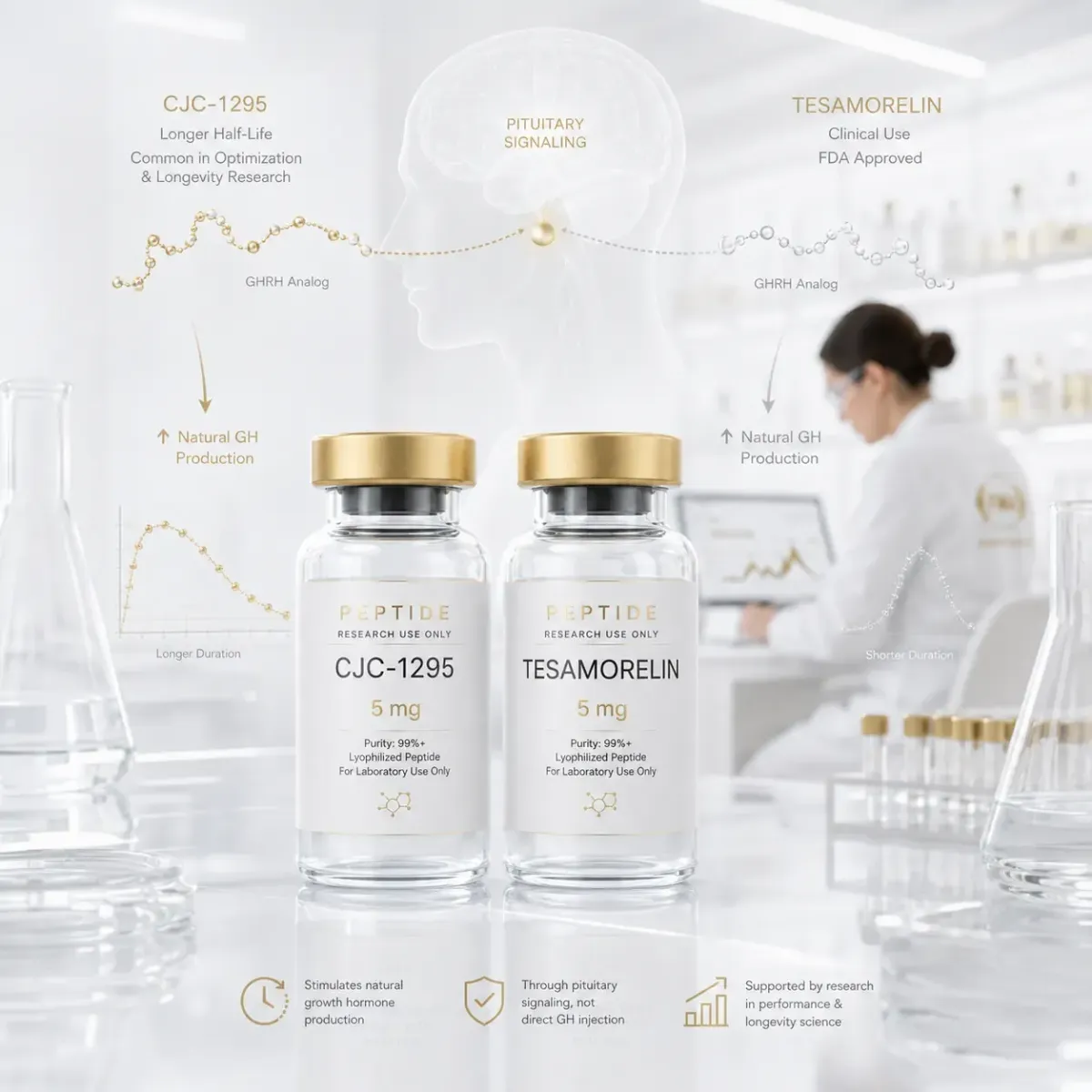
CJC-1295 vs Tesamorelin
Both peptides stimulate natural growth hormone production through pituitary signaling, rather than direct GH injection. Tesamorelin is FDA-approved for visceral abdominal fat reduction in HIV-associated lipodystrophy. CJC-1295 is popular in optimization and longevity research due to its extended half-life, and is often paired with Ipamorelin, though it lacks FDA approval for any specific indication.
| Feature | CJC-1295 | Tesamorelin |
|---|---|---|
| Primary goal | GH optimization & recovery | Visceral fat reduction |
| FDA approved | No | Yes (specific indication) |
| Typical use | Performance / longevity protocols | Metabolic & abdominal fat protocols |
| Half-life | Longer acting | Shorter physiologic pulse |
| Common pairing | Ipamorelin | Often standalone |
Referenced in: NEJM Tesamorelin Clinical Trial · PubMed Tesamorelin Visceral Fat Study · NCBI Tesamorelin Muscle & Fat Analysis
Longevity
How NAD+ Supports Cellular Energy
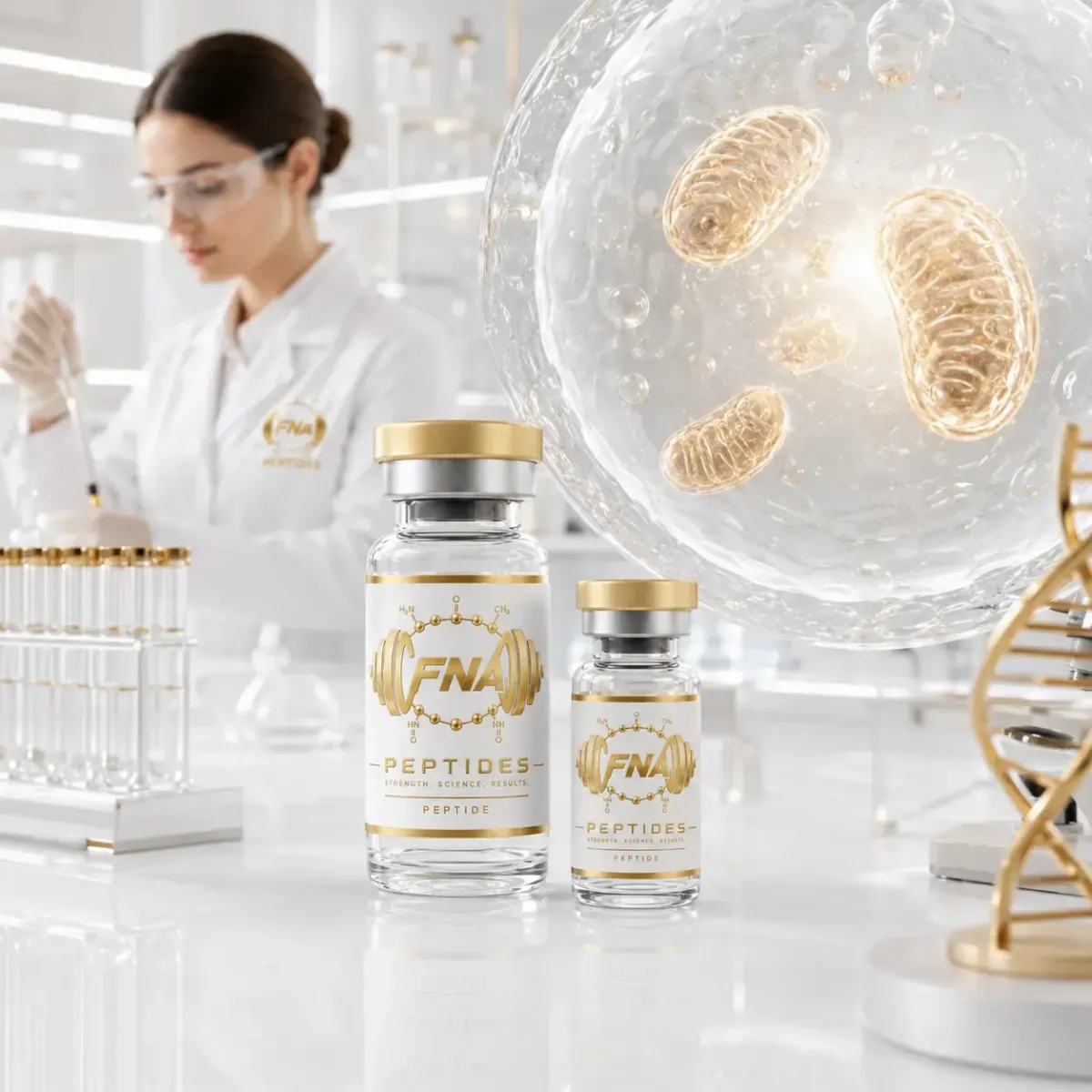
NAD+ functions as a coenzyme that converts nutrients into ATP, the cell's energy currency. It's heavily involved in mitochondrial function, metabolic regulation, DNA repair, oxidative stress management, and cellular signaling. Age-related decline is discussed as a contributor to fatigue, slower recovery, and mitochondrial dysfunction; NMN and NR are studied as common precursors.
Cellular energy production
Brain and cognitive function
Mitochondrial efficiency and DNA repair pathways
Referenced in: NCBI NAD+ Cellular Metabolism Review · Nature Review on NAD+ Metabolism · NCBI NAD+ and Energy Homeostasis
Quality
Peptide Purity
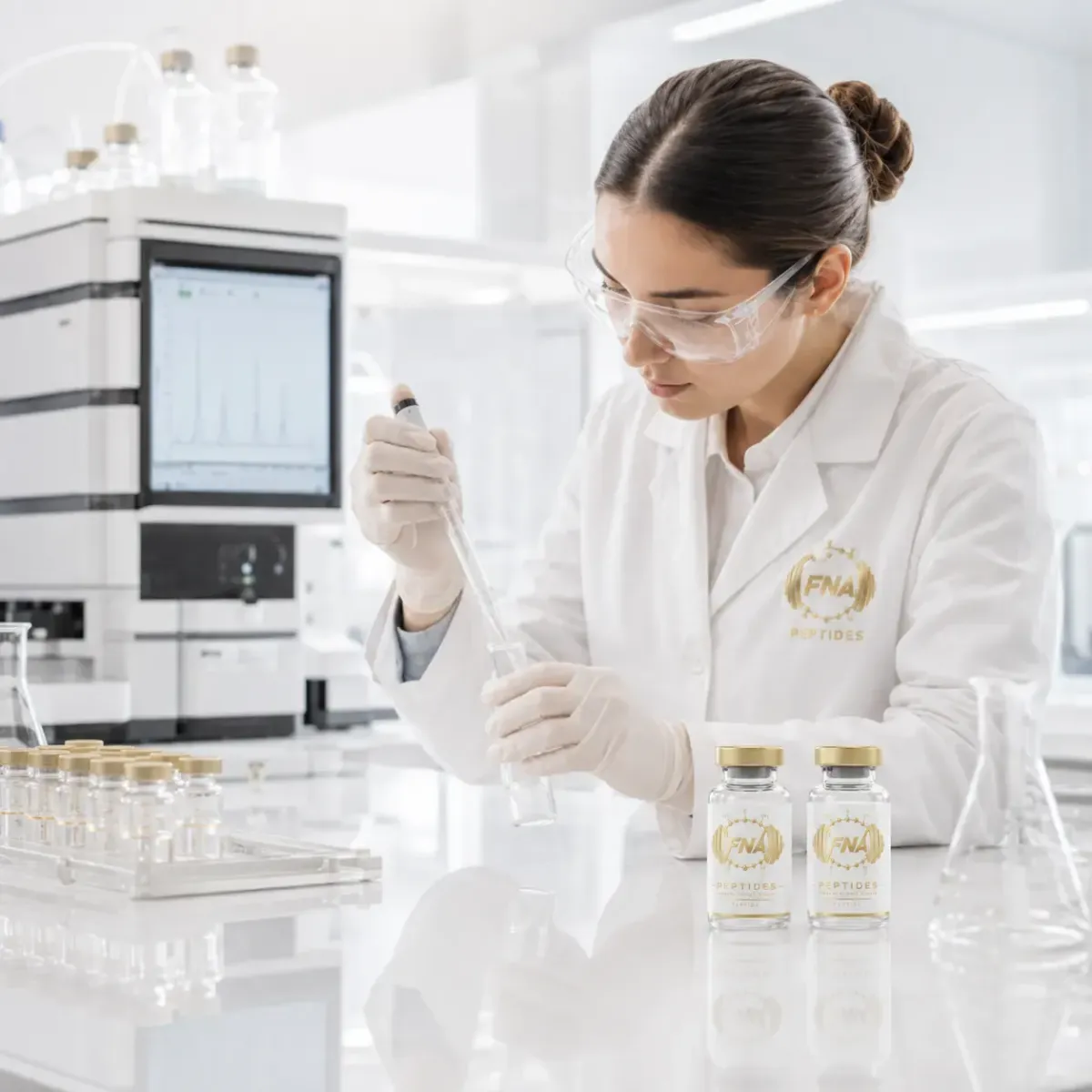
Purity measures how much of a sample is the intended peptide sequence versus contaminants, byproducts, or degraded material. Industry standards commonly cite 95%, 98%, and 99% purity levels. Higher purity generally means fewer impurities and more consistent product quality, though purity alone does not guarantee safety, since many online peptides come from unregulated suppliers with inconsistent testing standards.
Third-party Certificates of Analysis (COA)
Sterility and endotoxin testing, batch-level traceability
Independent purity verification via HPLC
Referenced in: NCBI Peptide Research Database · USADA BPC-157 Safety & Quality Concerns · PubMed BPC-157 Review & Safety Discussion
Browse by Category
Six Areas of Ongoing Research
Recovery
Understanding BPC-157 Signaling Pathways
A comprehensive overview of the current research landscape surrounding body protection compound and its studied mechanisms.
Longevity
NAD+ Metabolism and Cellular Energy
Exploring the role of nicotinamide adenine dinucleotide in sirtuin activation and mitochondrial function research.
Metabolic
GLP-1 Receptor Agonist Research Overview
An educational review of incretin pathway compounds and their studied interactions with metabolic signaling.
Cognitive
Neuropeptide Research Fundamentals
An introduction to synthetic neuropeptides and their studied roles in neurotransmitter modulation.
Performance
Growth Hormone Secretagogue Pathways
Research overview of GHRH analogs and GHS receptor interactions in growth factor signaling.
Supply
Reconstitution Best Practices for Research
A practical guide to proper reconstitution techniques for lyophilized research compounds.
Latest Industry Insights & News
Stay Updated on Research & Regulation
External publications, industry trends, and regulatory updates.
How to Read a Peptide COA: What Research Labs Should Check Before Using a Lot
A vial arrives, the label looks right, and the paperwork is a single PDF packed with numbers. Whether that PDF actually protects your experiment depends on whether you know how to read a peptide COA. Plenty of labs glance at the purity percentage and file the report away, which means they miss half of what it is telling them. This guide walks through each section so you can judge a lot before it reaches your bench. If you want a reference point, the FNA Peptides shows how lot-level documentation is handled for every order.
The short version: a peptide COA is a lot-specific lab report. Read it in this order: confirm the lot number matches your vial, check identity (mass), check purity (HPLC), check net peptide content, then confirm who ran the tests. |
What a Peptide Certificate of Analysis Actually Is
A peptide certificate of analysis explained simply: it is a document from a testing lab that records what was measured in one specific production lot, how it was measured, and what the results were. It is not a product brochure or a general promise of quality. It describes one batch, on one date, by one method.
That last part matters. A COA is only as useful as it is specific. A report that could apply to any vial of the same compound tells you very little.
What a COA Should Include
When reviewing what a COA should include, look for these items before you look at any result:
Compound name and sequence or molecular formula
Lot or batch number
Date of testing and, ideally, manufacture date
Testing laboratory name and contact details
Analytical methods used (for example RP-HPLC and mass spectrometry)
Actual results, not just "pass"
Net peptide content, where reported
Storage conditions and a signature or authorization
If several of these are missing, treat the report with caution. Vague documents are the most common weak point in peptide sourcing.
Step 1: Check Identity by Mass Spectrometry
Identity answers a basic question: is this the molecule you ordered? Mass spectrometry (often ESI-MS or LC-MS) measures the molecular weight of what is in the vial. The report should list a theoretical mass and an observed mass, and the two should agree closely.
You can cross-check the theoretical value yourself. Open chemical reference databases list molecular weights and formulas for many research peptides, which makes a quick sanity check easy. If the observed mass is off by more than the instrument's normal tolerance, ask questions before you use the lot.
Step 2: Read the HPLC Purity Result
Reverse-phase HPLC separates the target peptide from related impurities such as truncated or deletion sequences. The result is usually shown as a chromatogram, a trace with peaks, plus a purity percentage calculated from the main peak's area.
A few things worth noticing:
Look at the chromatogram, not only the number: One tall, clean peak is reassuring. Several shoulders or side peaks deserve a closer look.
Check the wavelength and method. Purity is method-dependent. A figure from one method cannot be compared directly with another.
Understand what 99% means. It reflects peptide-related purity by UV detection. It does not describe water, salts, or counterions in the powder. Analytical method validation principles are laid out in international quality guidelines if you want the underlying framework.
Which brings us to the number people confuse most often.
Net Peptide Content Meaning
Here is the net peptide content meaning in plain terms: it is the percentage of the vial's powder that is actually peptide. The rest is typically residual water and counterions such as acetate or trifluoroacetate, left over from synthesis and lyophilization.
Purity and net peptide content measure different things. A peptide can be 99% pure by HPLC and still be 75-85% peptide by weight. If you ignore that gap, your working solutions will be less concentrated than you think, and your dose-response data will drift.
When net content is reported, adjust your calculations accordingly. Each product page sits alongside its COA, so you can compare the stated vial amount with the report before you prepare stock solutions.
Lot Number Matching on COAs
Lot number matching on COAs is the simplest check and the one skipped most often. Take the lot number printed on your vial and compare it, character by character, with the number on the report. If they differ, the report does not describe your material.
A few habits make this easier:
Photograph the vial label when it arrives.
Save the COA with the lot number in the file name.
Record the lot in your lab notebook for every experiment.
That last step pays off months later, when a result needs to be traced back to a specific batch.
Third-Party Peptide Testing Labs: Why Independence Matters
A COA written by the seller grades its own homework. Reports from third-party peptide testing labs add an independent check, because the lab has no stake in the sale. When you read the header, confirm that the testing lab is named and can be contacted. Accreditation to the international standard for testing laboratory competence is a useful signal, though you should verify scope rather than assume it.
It is also fair to ask whether the report came from the actual lot or a representative earlier batch. Good suppliers answer that directly.
Research Use Only Labeling Explained
Research use only labeling explained: "RUO" means the material is supplied for laboratory investigation and is not intended for human or veterinary consumption, nor for diagnosing, treating, or preventing any condition. A legitimate supplier states this plainly on the product, the paperwork, and the website. It is a usage boundary, not a quality grade, so an RUO label says nothing about purity on its own. That is exactly why the COA matters.
A Quick Red-Flag Checklist
Keep this table beside the report. If any row lands in the right-hand column, pause before using the lot.
Check | What good looks like | Red flag |
Lot number | Matches the vial exactly | Missing or different |
Identity (MS) | Observed mass close to theoretical | Mass does not match |
Purity (HPLC) | Chromatogram attached, clean main peak | A percentage with no trace |
Results | Measured values reported | Only "pass/fail" wording |
Testing lab | Named and contactable | No lab listed |
Report | Unique to your lot | Identical across lots |
Frequently Asked Questions
How do I read a peptide COA quickly?
Start with the lot number, then identity (mass), purity (HPLC), and net peptide content. Finish by checking the testing lab's name and the report date.
What is a good purity level for research peptides?
Many labs look for 98% or higher by HPLC, but the right threshold depends on your assay. More important is that the number is backed by a visible chromatogram.
Is HPLC purity the same as net peptide content?
No. HPLC purity compares the peptide with related impurities. Net peptide content compares the peptide with everything else in the powder, including water and counterions.
Can a COA be wrong or outdated?
Yes, if it belongs to a different lot or an older batch. Always match the lot number and testing date to your vial.
Do I need a COA for every lot I buy?
For reproducible research, yes. Each lot can differ slightly, so each deserves its own report.
Final Thoughts
Reading a COA is less about decoding jargon and more about asking the right five questions in the right order. Once the habit sticks, it takes only a couple of minutes per lot and can save weeks of troubleshooting.
If you would like to see lot-level documentation before you decide on a supplier, you can contact the FNA Peptides team to ask for the COA for a specific lot and read it side by side with this guide. All products are supplied strictly for laboratory research use only.
Quick Reference
Peptide Glossary
HPLC (High-Performance Liquid Chromatography)
A lab method used to separate and measure the components of a compound, confirming purity down to a precise percentage.
COA (Certificate of Analysis)
A document showing the actual test results for a specific batch, including purity and identity confirmation.
Reconstitution
The process of adding a liquid diluent to a lyophilized (freeze-dried) peptide to create a measurable solution.
Bacteriostatic Water
Sterile water containing a small amount of benzyl alcohol, commonly used as a diluent for reconstitution.
Lyophilized
Freeze-dried. Peptides are shipped in this stable powder form and reconstituted with a diluent before use.
Titration
The gradual adjustment of a dose in small increments, often used in research protocols to observe a response.
NEWSLETTER SIGN-UP
Stay connected and make a difference.

Subscribe to our Mailing List
Domestically manufactured, independently verified research peptides. Strength. Science. Results.
Company
Resources
Contact
FDA & Legal Disclaimer. The statements on this website have not been evaluated by the U.S. Food and Drug Administration. Products offered by FNA Peptides are not intended to diagnose, treat, cure, or prevent any disease.
ALL PRODUCTS ARE SOLD FOR LABORATORY AND RESEARCH USE ONLY. THEY ARE NOT FOR HUMAN OR VETERINARY CONSUMPTION. FNA Peptides is a chemical supplier and is not a compounding pharmacy under Section 503A, nor an outsourcing facility under Section 503B, of the Federal Food, Drug, and Cosmetic Act. Customers must be 21 years of age or older, and are responsible for handling all materials in accordance with applicable local, state, and federal laws.
© 2026 FNA Peptides - Orlando Group INC - All Rights Reserved.


Quick links
Newsletter Sign-UP
Stay connected and make a difference.
Subscribe to our Mailing List
By subscribing you confirm you are 21+ and acquire products for laboratory research only.


