
Research Use Only
All products supplied by FNA Peptides are strictly for laboratory and scientific research. They are not for human or veterinary consumption, and are not intended to diagnose, treat, cure, or prevent any disease. By entering, you confirm you are 21 years of age or older and accept our Terms and Privacy Policy.
Education
The Research Hub
Educational resources covering research compounds, mechanisms of action, and study methodologies. Content is provided for informational purposes only and does not constitute medical advice.
Featured Research
Longer reads on specific compounds and mechanisms, for researchers who want the full picture.
Recovery
Understanding BPC-157 Signaling Pathways
A synthetic peptide derived from gastric juice compounds, studied for potential regenerative and anti-inflammatory properties. Research suggests it may influence angiogenesis (blood vessel formation), tissue repair, collagen production, and recovery pathways.
Animal and preclinical studies show faster healing responses
Human clinical data remains limited
USADA has flagged the lack of FDA approval and incomplete safety data
Referenced in: NCBI Review on BPC-157 Regeneration Research · ClinicalTrials.gov BPC-157 Muscle Injury Study · PubMed BPC-157 Soft Tissue Research

Performance
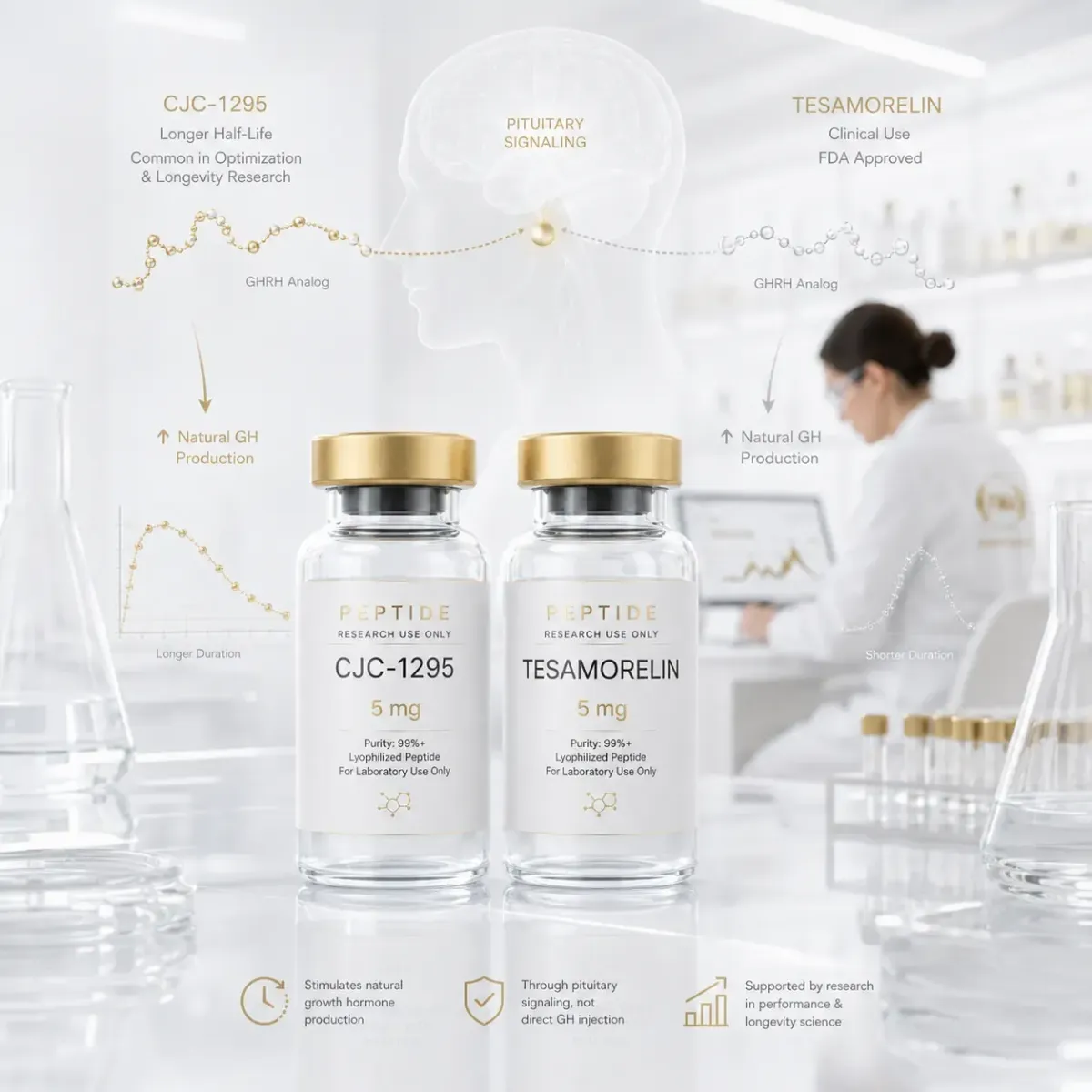
CJC-1295 vs Tesamorelin
Both peptides stimulate natural growth hormone production through pituitary signaling, rather than direct GH injection. Tesamorelin is FDA-approved for visceral abdominal fat reduction in HIV-associated lipodystrophy. CJC-1295 is popular in optimization and longevity research due to its extended half-life, and is often paired with Ipamorelin, though it lacks FDA approval for any specific indication.
| Feature | CJC-1295 | Tesamorelin |
|---|---|---|
| Primary goal | GH optimization & recovery | Visceral fat reduction |
| FDA approved | No | Yes (specific indication) |
| Typical use | Performance / longevity protocols | Metabolic & abdominal fat protocols |
| Half-life | Longer acting | Shorter physiologic pulse |
| Common pairing | Ipamorelin | Often standalone |
Referenced in: NEJM Tesamorelin Clinical Trial · PubMed Tesamorelin Visceral Fat Study · NCBI Tesamorelin Muscle & Fat Analysis
Longevity
How NAD+ Supports Cellular Energy
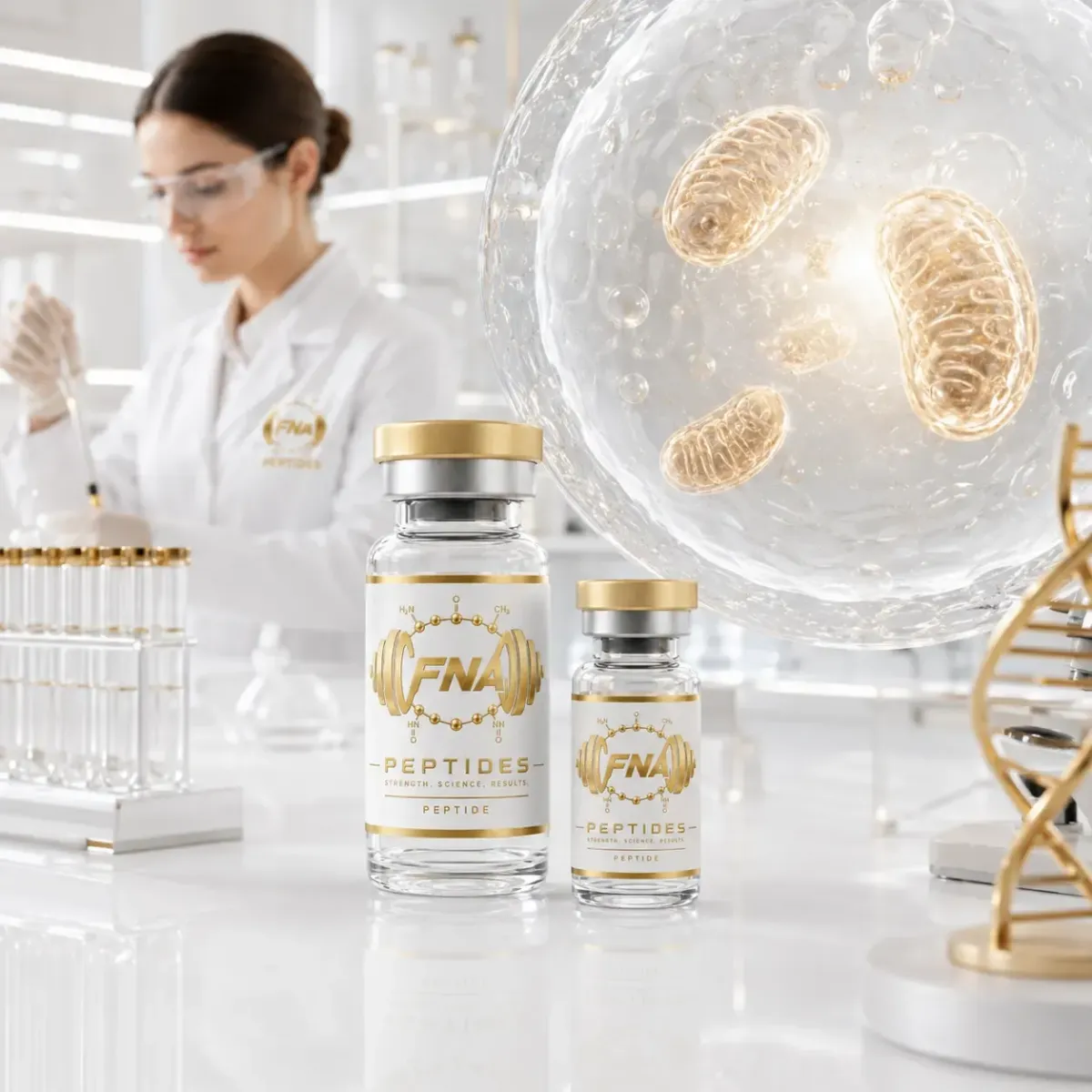
NAD+ functions as a coenzyme that converts nutrients into ATP, the cell's energy currency. It's heavily involved in mitochondrial function, metabolic regulation, DNA repair, oxidative stress management, and cellular signaling. Age-related decline is discussed as a contributor to fatigue, slower recovery, and mitochondrial dysfunction; NMN and NR are studied as common precursors.
Cellular energy production
Brain and cognitive function
Mitochondrial efficiency and DNA repair pathways
Referenced in: NCBI NAD+ Cellular Metabolism Review · Nature Review on NAD+ Metabolism · NCBI NAD+ and Energy Homeostasis
Quality
Peptide Purity
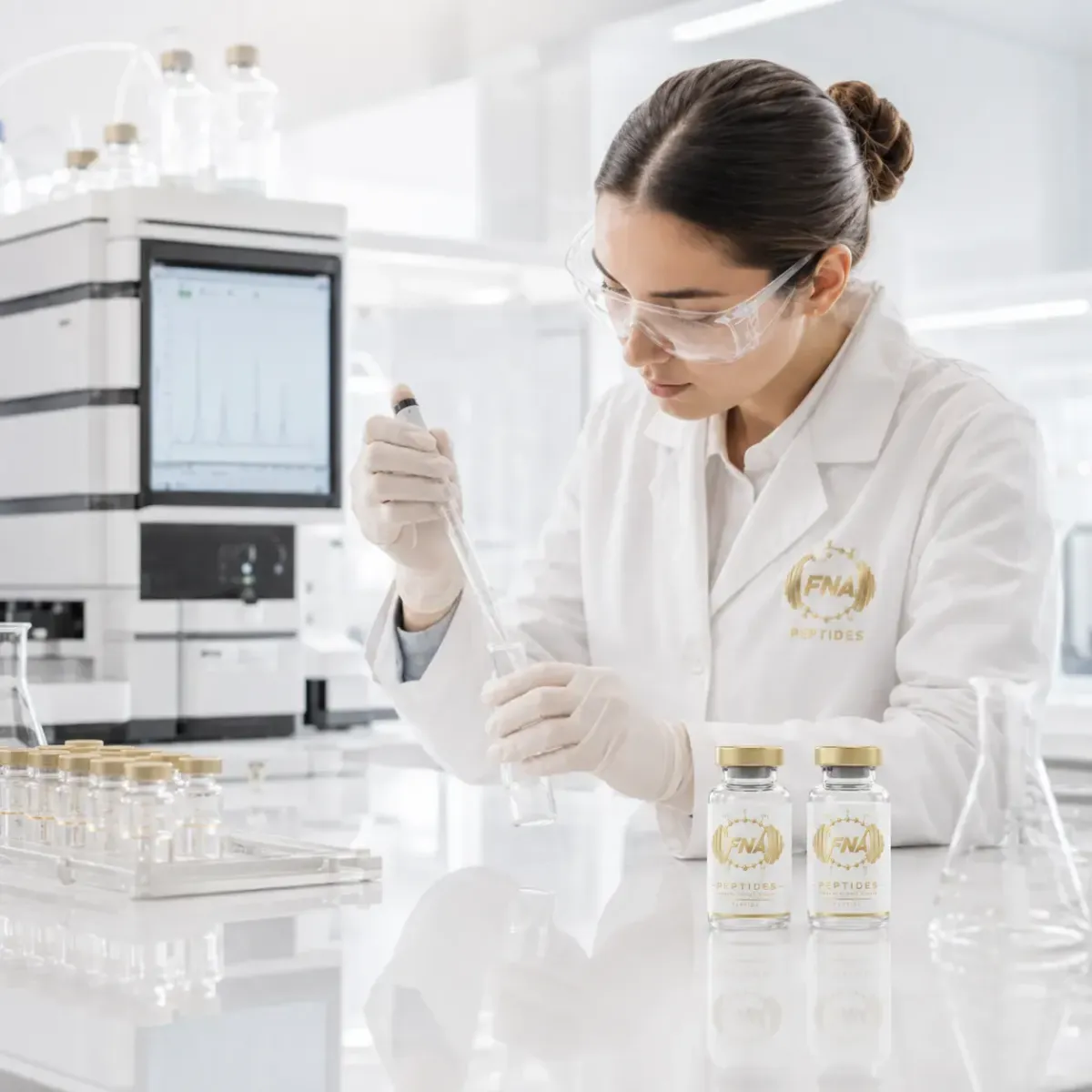
Purity measures how much of a sample is the intended peptide sequence versus contaminants, byproducts, or degraded material. Industry standards commonly cite 95%, 98%, and 99% purity levels. Higher purity generally means fewer impurities and more consistent product quality, though purity alone does not guarantee safety, since many online peptides come from unregulated suppliers with inconsistent testing standards.
Third-party Certificates of Analysis (COA)
Sterility and endotoxin testing, batch-level traceability
Independent purity verification via HPLC
Referenced in: NCBI Peptide Research Database · USADA BPC-157 Safety & Quality Concerns · PubMed BPC-157 Review & Safety Discussion
Browse by Category
Six Areas of Ongoing Research
Recovery
Understanding BPC-157 Signaling Pathways
A comprehensive overview of the current research landscape surrounding body protection compound and its studied mechanisms.
Longevity
NAD+ Metabolism and Cellular Energy
Exploring the role of nicotinamide adenine dinucleotide in sirtuin activation and mitochondrial function research.
Metabolic
GLP-1 Receptor Agonist Research Overview
An educational review of incretin pathway compounds and their studied interactions with metabolic signaling.
Cognitive
Neuropeptide Research Fundamentals
An introduction to synthetic neuropeptides and their studied roles in neurotransmitter modulation.
Performance
Growth Hormone Secretagogue Pathways
Research overview of GHRH analogs and GHS receptor interactions in growth factor signaling.
Supply
Reconstitution Best Practices for Research
A practical guide to proper reconstitution techniques for lyophilized research compounds.
Latest Industry Insights & News
Stay Updated on Research & Regulation
External publications, industry trends, and regulatory updates.
BPC-157 and Tissue Repair - What the 2026 Research Review Reveals

Quick Reference
Peptide Glossary
HPLC (High-Performance Liquid Chromatography)
A lab method used to separate and measure the components of a compound, confirming purity down to a precise percentage.
COA (Certificate of Analysis)
A document showing the actual test results for a specific batch, including purity and identity confirmation.
Reconstitution
The process of adding a liquid diluent to a lyophilized (freeze-dried) peptide to create a measurable solution.
Bacteriostatic Water
Sterile water containing a small amount of benzyl alcohol, commonly used as a diluent for reconstitution.
Lyophilized
Freeze-dried. Peptides are shipped in this stable powder form and reconstituted with a diluent before use.
Titration
The gradual adjustment of a dose in small increments, often used in research protocols to observe a response.
NEWSLETTER SIGN-UP
Stay connected and make a difference.

Subscribe to our Mailing List

Domestically manufactured, independently verified research peptides. Strength. Science. Results.
Company
Resources
Contact
FDA & Legal Disclaimer. The statements on this website have not been evaluated by the U.S. Food and Drug Administration. Products offered by FNA Peptides are not intended to diagnose, treat, cure, or prevent any disease.
ALL PRODUCTS ARE SOLD FOR LABORATORY AND RESEARCH USE ONLY. THEY ARE NOT FOR HUMAN OR VETERINARY CONSUMPTION. FNA Peptides is a chemical supplier and is not a compounding pharmacy under Section 503A, nor an outsourcing facility under Section 503B, of the Federal Food, Drug, and Cosmetic Act. Customers must be 21 years of age or older, and are responsible for handling all materials in accordance with applicable local, state, and federal laws.
© 2026 FNA Peptides - Orlando Group INC - All Rights Reserved.


Quick links
Newsletter Sign-UP
Stay connected and make a difference.
Subscribe to our Mailing List
By subscribing you confirm you are 21+ and acquire products for laboratory research only.


